Rationale for Unit:
The most important thing any student, teacher, scholar, or lawyer can do with legal writing is help someone in need. A heart for public service is the truest expression of excellence in a lawyer, perhaps in any human.
Unit 3_Part A: takes the writing theory from Unit 1, legal underpinnings and formal polish from Unit 2, and asks students to apply themselves and translate their understanding of legal language to serve an audience in need. Unit 3 explores how legal language impacts public audiences every day, how we are often shaped by the coverage we consume, and how we can acknowledge our own voice, positions, and principles to serve an effort bigger than ourselves.
“I have come to the conviction that if you cannot translate your thoughts into uneducated language, then your thoughts were confused. Power to translate is the test of having really understood one’s own meaning.” -C.S. Lewis
Unit 3 seeks to help students embrace the duty and privilege the practice of law enables through service, whether one ultimately becomes an attorney or not.
OVerview Calendar: Unit 3 (Part A): Legal writing for a lay audience (by a non-lawyer)
Weekly Lesson plans
Week 10
WEeks 11 & 12
Unit 3_Part A_Opinion editorial for an in-need audience_Assignment prompt
Unit 3_Part B: The conclusion of Unit 3 is dedicated to the would-be lawyer. It covers the importance, and previews the consequences if lacking, of clear communication in the legal process. We begin with an overview of the American Bar Association‘s Model Rules of Professional Conduct most likely to apply to legal writing. Next, we review client communications. Ultimately, we cover how writing impacts each element of a trial from jury selection to jury instructions.
“Lawyers have their duties as citizens, but they also have special duties as lawyers. Their obligations go far deeper than earning a living as specialists in corporation or tax law. They have a continuing responsibility to uphold the fundamental principles of justice from which the law cannot depart.” -Robert F. Kennedy, former Attorney General of the United States
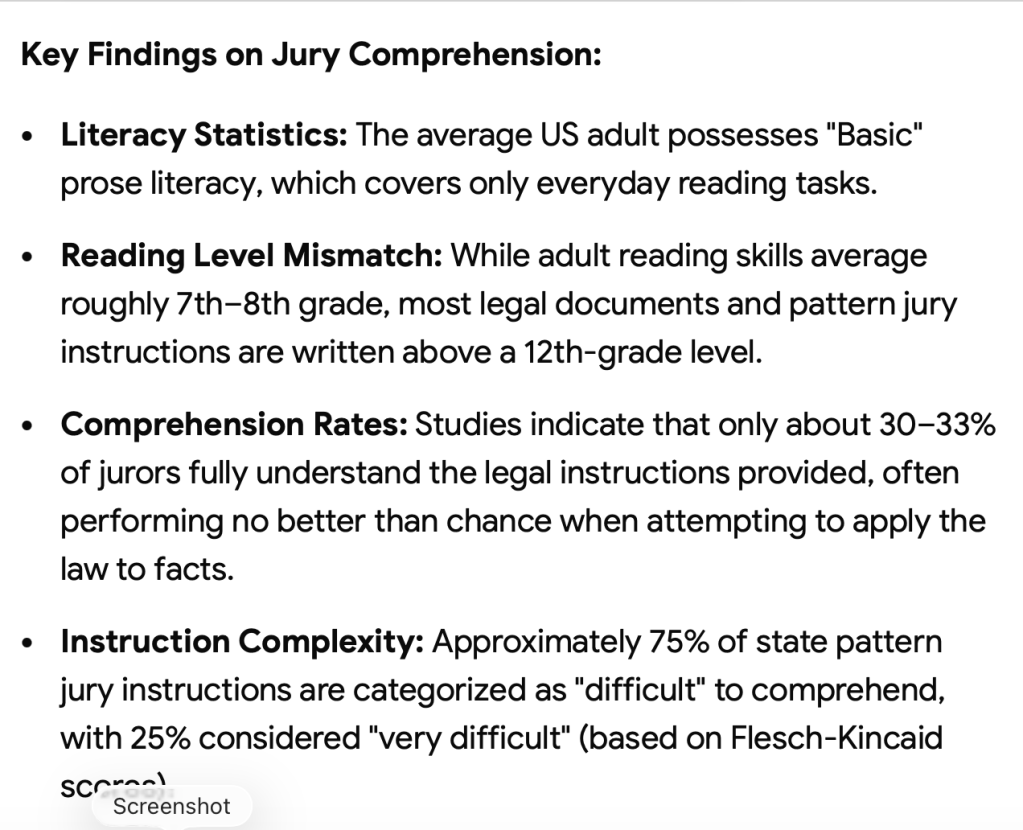
“No better than chance…” Issues with legal language in jury selection, jury instructions, and the impact on justice.